BLU-MED® Negative Pressure Isolation Facilities Ready for Immediate Deployment
As healthcare organizations continue responding to the expanding Ebola outbreak in the Democratic Republic of the Congo (DRC) and Uganda, rapidly deployable isolation infrastructure remains critical for infectious disease containment, patient treatment, and surge healthcare operations – particularly in remote and resource-limited environments where existing medical infrastructure may be limited or overwhelmed.
During the major West Africa Ebola outbreak from 2014–2016, government agencies, humanitarian organizations, and healthcare responders utilized negative-pressure isolation facilities from BLU-MED Response Systems® (BLU-MED®) in Liberia and other affected regions to expand patient isolation capacity and improve infection control measures.
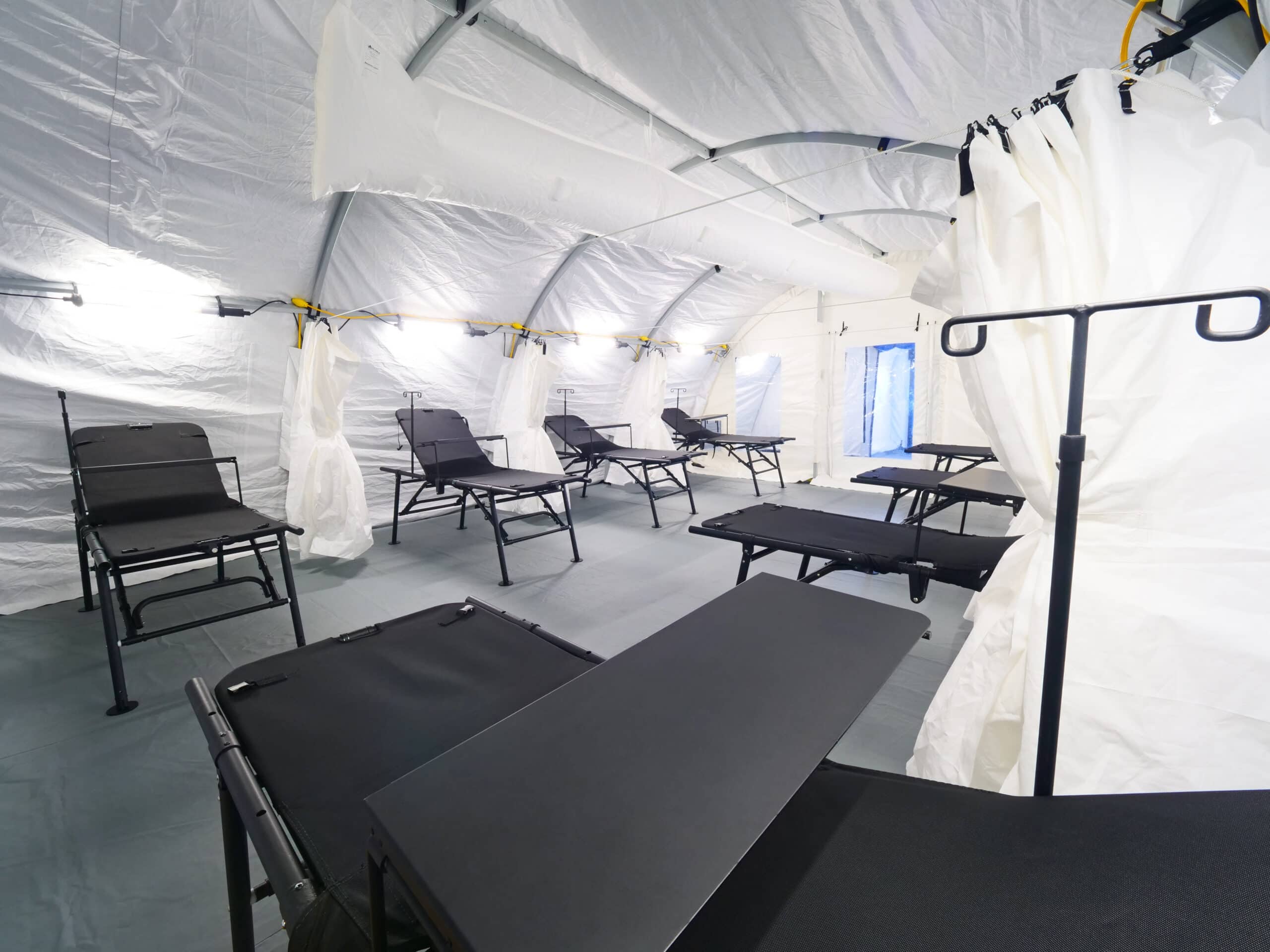
Unlike temporary party tents and lightweight event structures currently being used by some organizations and agencies for infectious disease response operations, military-grade medical shelters from BLU-MED® are engineered specifically for healthcare operations, biological containment, and long-term patient treatment. BLU-MED® isolation facilities provide a substantially safer and more controlled environment through integrated negative-pressure airflow systems, durable engineered construction, and the ability to safely support both short- and long-term containment or recovery operations in harsh environments.
BLU-MED® medical facilities are engineered to withstand high winds and snow loads for safe year-round operation in virtually any climate worldwide. When equipped with BLU-MED® Environmental Control Units (ECUs) and HEPA Filtration Systems, the facilities provide fully temperature-controlled treatment and isolation environments capable of supporting healthcare operations in extreme heat, humidity, cold weather, and austere environments.
BLU-MED Response Systems® currently maintains three fully equipped 50-bed Negative Pressure Isolation Facilities, ready for immediate deployment worldwide, with the capability to rapidly manufacture additional facilities to support infectious disease outbreaks, emergency healthcare expansion, and patient isolation operations.
For additional information about BLU-MED Response Systems® Negative Pressure Isolation Facilities, call +1-575-541-9116 or request a quote by completing our online contact form.
Ebola Outbreak in DRC and Uganda Continues to Expand as WHO Scales Response Efforts
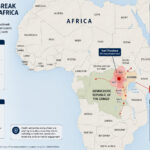
According to the U.S. Centers for Disease Control and Prevention (CDC), as of May 31, 2026, the Democratic Republic of the Congo (DRC) has reported 282 confirmed Ebola cases and 42 confirmed deaths, along with 220 suspected cases. Uganda has reported 9 confirmed cases, 1 confirmed death, 1 probable case, and 1 probable death associated with the outbreak.
The outbreak remains centered primarily in Ituri Province in northeastern DRC, including the city of Bunia, where healthcare infrastructure and treatment capacity continue to face increasing pressure as response operations expand.
WHO Director-General Visits Epicenter of Outbreak
WHO Director-General Tedros Adhanom Ghebreyesus recently traveled to eastern DRC to assess response operations and meet with frontline healthcare workers and government officials coordinating containment efforts.
During his visit, Tedros warned that the outbreak continues to outpace current response capabilities in some areas, stressing the need for additional international support, treatment infrastructure, healthcare personnel, and containment resources.
At the same time, WHO officials confirmed positive developments as several Ebola patients — including healthcare workers infected during the outbreak — successfully recovered and were discharged from treatment facilities in eastern Congo.
Surge Treatment Infrastructure Expanding in Bunia
As healthcare responders prepare for the possibility of additional case surges, local authorities and international partners are expanding treatment and isolation capacity in and around Bunia.
Recent footage from the region shows preparations underway outside a converted pediatric hospital in Bunia, including construction on a large adjacent site intended for the development of a semi-permanent medical facility to support patient surge capacity, isolation operations, and Ebola treatment efforts if the primary facility exceeds operational capacity.
Healthcare officials continue to emphasize the importance of rapidly deployable treatment and isolation infrastructure to help contain transmission while expanding patient care capabilities in remote and resource-limited environments.
International Monitoring Continues
Global health agencies are also closely monitoring the potential international spread associated with the outbreak.
Brazilian health authorities recently confirmed they are investigating a possible Ebola-related case connected to travel from the affected region, though officials stressed that no confirmed spread within Brazil has been identified at this time.
While WHO officials continue emphasizing that the outbreak remains regionally concentrated, international monitoring, screening, and preparedness efforts remain elevated as healthcare organizations work to prevent wider transmission.