WHO Warns Ebola Outbreak in Central Africa Is Outpacing Response Efforts
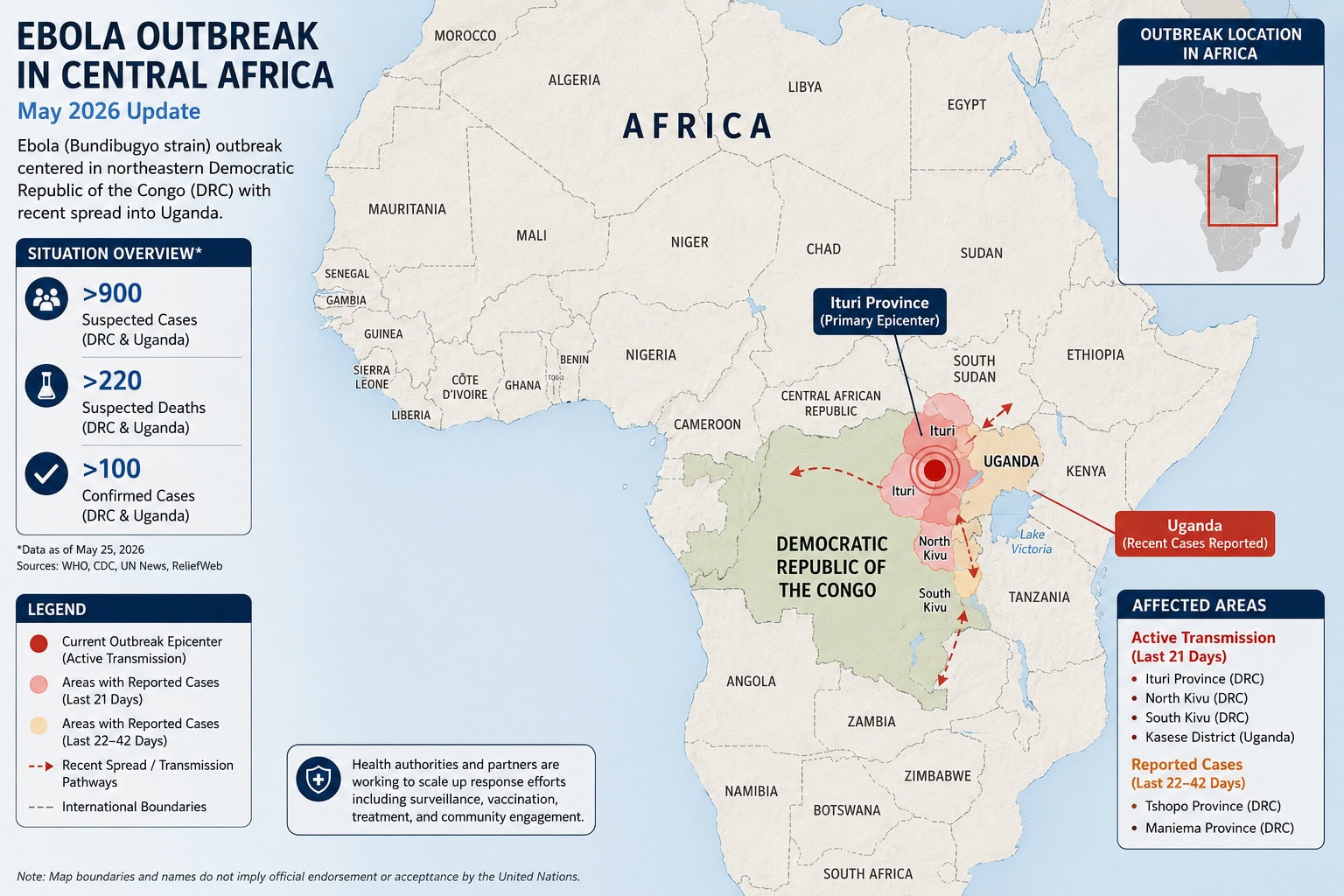
The ongoing Ebola outbreak in the Democratic Republic of the Congo (DRC) and neighboring regions continues to escalate, with global health officials warning that response efforts are struggling to keep pace with the spread of the disease. According to the World Health Organization (WHO) and the U.S. Centers for Disease Control and Prevention (CDC), the outbreak has resulted in more than 900 suspected cases and over 220 suspected deaths across the Democratic Republic of the Congo and Uganda, with confirmed infections continuing to rise.
The outbreak is centered primarily in northeastern DRC, particularly in Ituri Province, where healthcare infrastructure remains limited and difficult terrain, regional instability, and population displacement continue to complicate response operations. International health officials are also closely monitoring potential cross-border transmission risks involving Uganda and surrounding countries.
WHO Warns Response Efforts Are Being Outpaced
WHO Director-General Tedros Adhanom Ghebreyesus warned that the outbreak is spreading faster than healthcare systems can respond effectively.
“The outbreak is outpacing the response,” Tedros stated during a recent WHO briefing, emphasizing the urgent need for additional international support, medical infrastructure, healthcare personnel, and containment resources.
According to the WHO and humanitarian organizations operating in the region, healthcare responders continue facing significant challenges, including:
- Limited treatment and isolation capacity
- Inadequate healthcare infrastructure in remote regions
- Delayed case detection and laboratory confirmation
- Security concerns and regional instability
- Difficult transportation and logistics conditions
- Shortages of trained healthcare personnel and medical supplies
Health officials continue to work to expand contact tracing, laboratory testing, treatment capacity, and vaccination programs, while humanitarian organizations race to improve patient isolation and infection control in affected regions.
Why This Ebola Outbreak Is Different
Unlike several previous major Ebola outbreaks caused by the Zaire strain, the current outbreak involves the Bundibugyo strain of Ebola virus disease (EVD), which presents additional challenges for healthcare responders.
According to global health officials and infectious disease experts:
- Existing Ebola vaccines may provide limited effectiveness against the Bundibugyo strain
- Approved therapeutics developed for prior Ebola outbreaks may not be as effective
- Diagnostic challenges have delayed portions of the response
- Remote outbreak locations continue to strain logistics and patient transport operations
- Healthcare worker infections remain a major concern
Public health experts warn that while Ebola outbreaks are typically more geographically contained than airborne respiratory pandemics, aggressive containment and isolation efforts remain critical to limiting transmission.
The Critical Role of Isolation and Deployable Healthcare Infrastructure
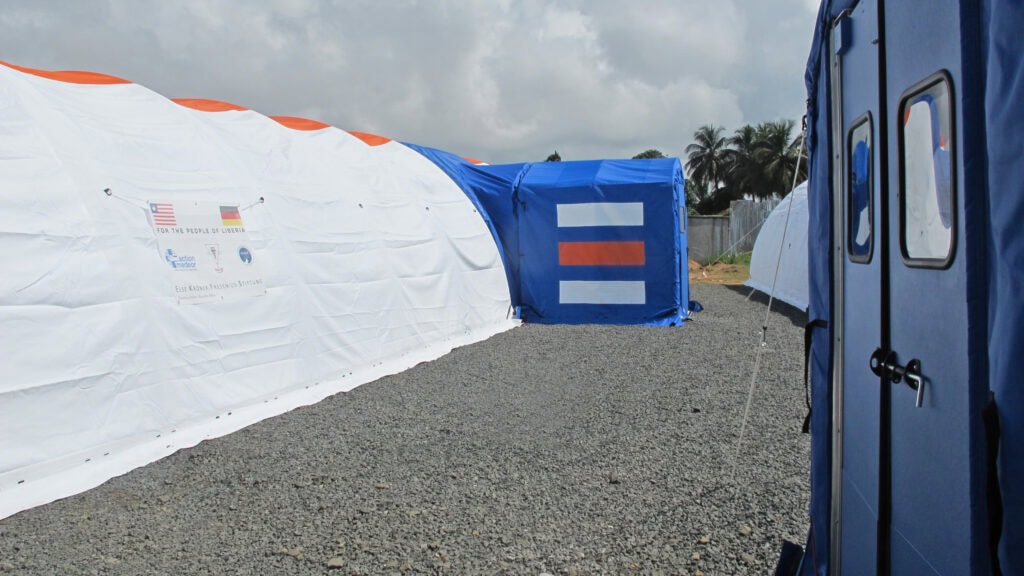
Two 22-bed BLU-MED Response Systems® Ebola isolation units were deployed in Monrovia, Liberia, supporting healthcare providers and humanitarian organizations responding to the West Africa Ebola outbreak.
As response efforts continue in Central Africa, healthcare organizations are once again confronting many of the same infrastructure challenges experienced during the major West Africa Ebola outbreak from 2014–2016.
During that outbreak, healthcare systems across Liberia, Sierra Leone, and Guinea were rapidly overwhelmed by the scale of infections. Remote communities often lacked adequate treatment space, isolation facilities, medical equipment, and infection-control infrastructure.
Rapidly deployable medical facilities played a vital role in filling critical healthcare infrastructure gaps, helping contain transmission and expand patient care capabilities, with government agencies, military forces, and humanitarian organizations utilizing BLU-MED Response Systems® Negative Pressure Isolation Facilities and mobile field hospitals to support infectious disease containment and patient treatment operations in Liberia, Monrovia, and other affected regions.
These systems provided:
- Rapidly deployable patient isolation capacity
- Negative pressure airflow containment systems
- HEPA-filtered air handling capabilities
- Expandable treatment and triage facilities
- Controlled patient movement and infection control zones
- Scalable healthcare infrastructure for remote and austere environments
The lessons learned during the 2014–2016 Ebola outbreak reinforced the importance of rapidly deployable healthcare infrastructure capable of supporting infectious disease response operations where permanent medical facilities may be limited, damaged, or overwhelmed.
Preparing for Future Infectious Disease Emergencies
While global healthcare organizations continue working to contain the current Ebola outbreak, the situation highlights the ongoing need for flexible, rapidly deployable medical infrastructure that can support infectious disease response operations worldwide.
From outbreak containment and patient isolation to surge treatment capacity and emergency healthcare expansion, deployable medical systems remain a critical component of global health preparedness — particularly in remote, resource-limited, or disaster-affected regions where speed, containment, and scalability are essential.
BLU-MED Response Systems® currently maintains three 50-bed Negative Pressure Isolation Facilities in stock and ready for rapid deployment, with the capability to quickly manufacture additional systems to support infectious disease response operations, emergency healthcare expansion, and patient isolation requirements worldwide.
For additional information about BLU-MED Response Systems® Negative Pressure Isolation Facilities, please complete our online contact form.