Ebola Outbreak in Central Africa Raises Global Concern: Supporting Infectious Disease Response in Remote and Resource-Limited Areas
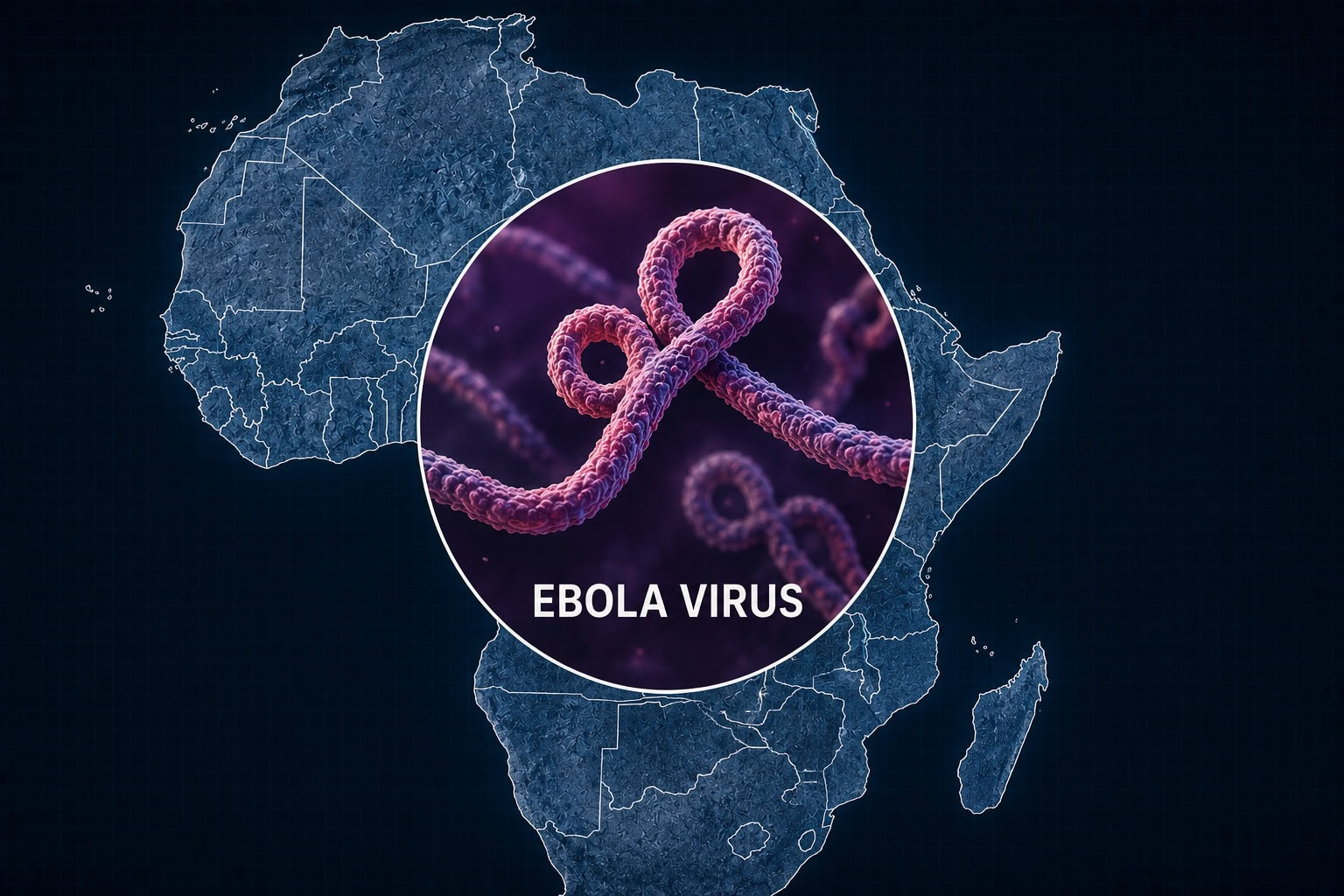
The World Health Organization (WHO) has declared the ongoing Ebola outbreak in the Democratic Republic of the Congo (DRC) and Uganda a Public Health Emergency of International Concern (PHEIC), citing concerns over the speed of transmission, regional instability, and the potential for international spread.
The outbreak is centered primarily in Ituri Province in northeastern DRC, with confirmed cases also identified in Uganda, including Kampala. As of mid-May 2026, health officials have reported hundreds of suspected cases and more than 80 suspected deaths, with numbers continuing to rise as testing and contact tracing efforts expand.
What Makes This Ebola Outbreak Different?
Unlike many previous Ebola outbreaks caused by the Zaire strain of the virus, the current outbreak involves the Bundibugyo strain of Ebola virus disease (EVD). This distinction is significant because there are currently no approved vaccines or targeted therapeutics specifically developed for the Bundibugyo strain.
Additional factors increasing global concern include:
- Spread into urban centers, including Kampala and Goma
- Transmission in conflict-affected and difficult-to-access regions
- Infections among healthcare workers
- Population displacement and cross-border movement
- Delayed identification of the virus due to initial false-negative testing
- Limited healthcare infrastructure in affected areas
WHO officials have warned that the outbreak may continue expanding without aggressive containment measures and international support.
Understanding Ebola Virus Disease (EVD)
Ebola virus disease is a severe and often fatal viral hemorrhagic fever caused by infection with an orthoebolavirus. First identified in 1976 near the Ebola River in what is now the Democratic Republic of the Congo, Ebola outbreaks have historically occurred in sub-Saharan Africa.
The virus spreads through direct contact with infected bodily fluids, contaminated materials, or infected animals. Symptoms often begin suddenly and may include:
- Fever
- Severe fatigue and weakness
- Headache and muscle pain
- Vomiting and diarrhea
- Abdominal pain
- Internal and external bleeding
- Organ failure in severe cases
Fatality rates vary depending on the strain and the availability of medical care. Historically, the Bundibugyo strain has demonstrated mortality rates ranging from approximately 25% to 50%.
Typical Ebola Treatment and Infection Control Measures
There is currently no universally approved cure for all Ebola strains. Treatment primarily focuses on supportive care, including:
- Intravenous fluids and electrolyte replacement
- Oxygen support
- Blood pressure stabilization
- Symptom management
- Treatment of secondary infections
- Intensive monitoring and isolation
Equally important are infection prevention and control measures designed to stop transmission within healthcare settings and surrounding communities.
These measures commonly include:
- Negative-pressure isolation facilities or wards
- Strict PPE protocols
- Controlled patient movement
- HEPA filtration systems
- Decontamination procedures
- Dedicated screening and triage areas
- Controlled waste disposal systems
Rapid deployment of isolation and treatment infrastructure is often critical in outbreak regions where existing hospitals may be overwhelmed or lack specialized containment capabilities.
Outbreak vs. Epidemic vs. Pandemic: What’s the Difference?
The terms outbreak, epidemic, and pandemic are often used interchangeably in media coverage, but they represent different levels of disease spread.
- Outbreak: An outbreak refers to a sudden increase in disease cases within a localized area or specific population. Outbreaks are typically limited geographically and may involve a single community, facility, or region.
- Epidemic: An epidemic occurs when a disease spreads rapidly across a larger geographic area, affecting multiple communities or regions beyond what is normally expected. The current Ebola situation in DRC and Uganda is considered an epidemic due to sustained transmission across multiple provinces and international borders.
- Pandemic: A pandemic is a worldwide epidemic involving sustained transmission across multiple countries or continents, often affecting large portions of the global population. While the WHO has declared the current Ebola situation a Public Health Emergency of International Concern, it has specifically stated that the outbreak does not currently meet the criteria for a pandemic emergency.
Lessons Learned from Previous Ebola Responses
The 2014–2015 West Africa Ebola outbreak highlighted critical weaknesses in healthcare infrastructure, especially in remote and resource-limited environments. Healthcare systems in affected regions struggled with insufficient isolation capacity, limited treatment space, shortages of trained personnel, and inadequate infection control infrastructure.
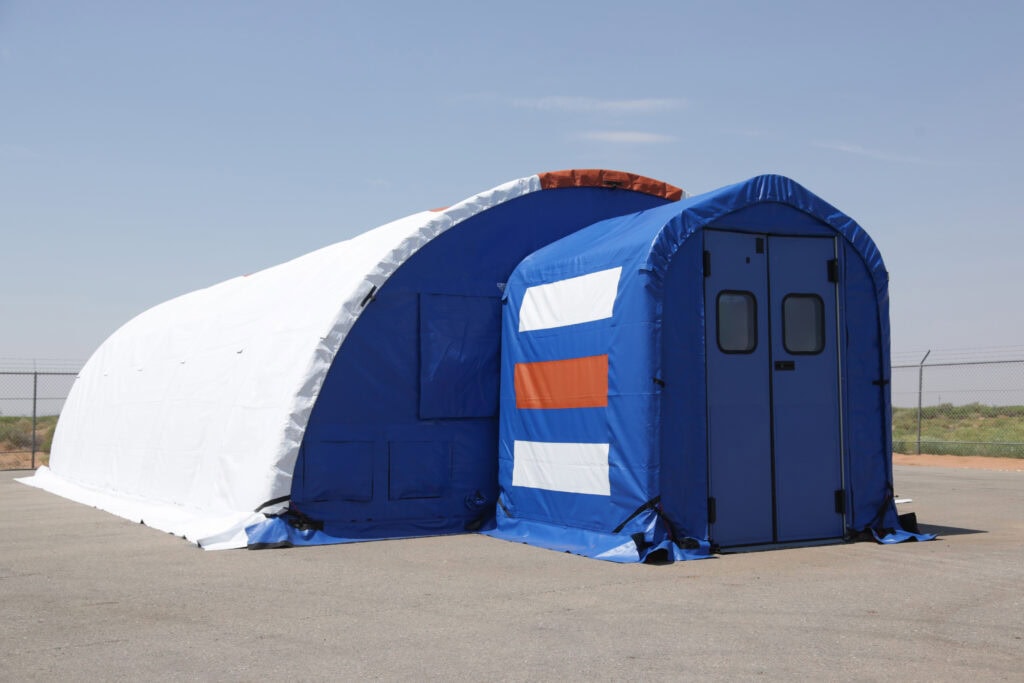
A rapidly deployable medical shelter from BLU-MED Response Systems® with a vestibule entry and bump-through isolation doors designed to support infectious disease containment, patient screening, and controlled personnel movement in remote or emergency response environments.
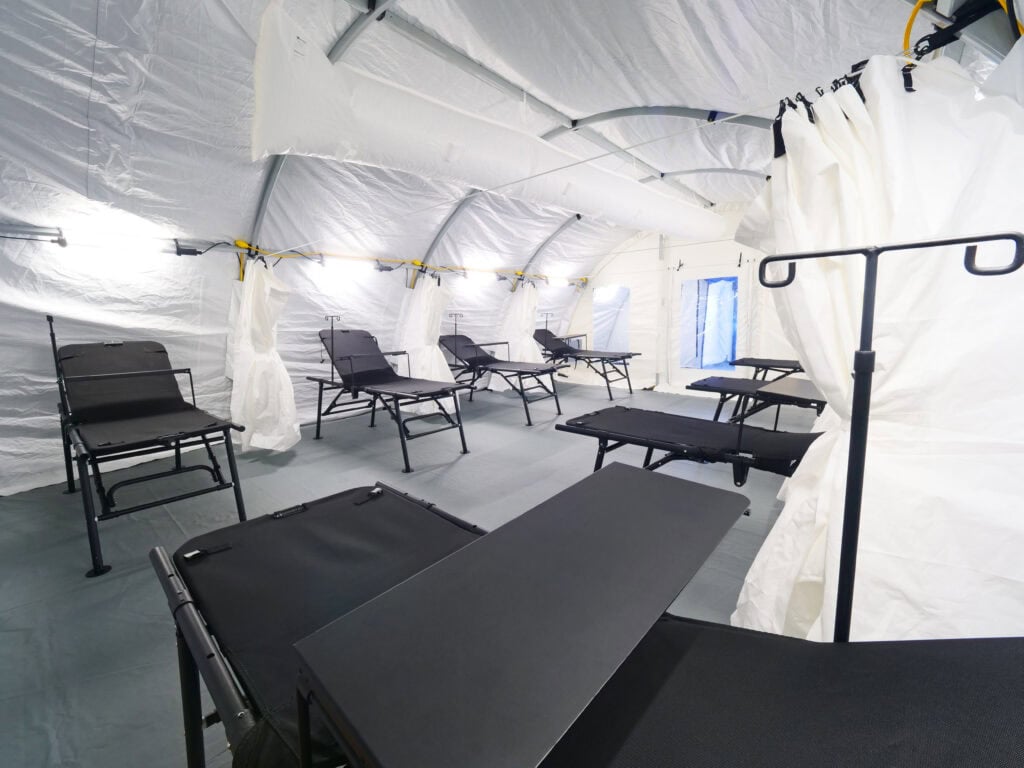
Interior of a BLU-MED Response Systems® Negative Pressure Isolation Facility configured with adjustable ICU beds, providing isolated patient treatment space with controlled airflow and infection containment capabilities for high-consequence infectious disease response operations.
Rapidly deployable medical facilities played a vital role in filling critical healthcare infrastructure gaps, helping contain transmission and expand patient care capabilities, with government agencies, military forces, and humanitarian organizations utilizing BLU-MED Response Systems® Negative Pressure Isolation Facilities to support infectious disease containment and patient treatment operations in Liberia, Monrovia, and other affected regions. These systems provided:
- Isolated patient treatment environments
- Negative pressure containment capabilities
- HEPA-filtered airflow systems
- Rapidly deployable treatment and triage space
- Scalable healthcare infrastructure for remote environments
The lessons from the Ebola outbreaks in Liberia and other affected regions reinforced the importance of rapidly deployable medical infrastructure capable of supporting infectious disease containment in austere, remote environments.
As global health organizations respond to the current outbreak in Central Africa, many of those same challenges remain relevant today — including the need for expandable treatment space, isolation capabilities, and resilient healthcare infrastructure that can be deployed quickly where traditional healthcare systems may be limited or overwhelmed.
Healthcare preparedness agencies, emergency planners, NGOs, and military medical units continue to evaluate deployable healthcare infrastructure solutions capable of supporting infectious disease response operations worldwide.
For additional information about BLU-MED® Negative Pressure Isolation Facilities, mobile field hospitals, and other rapidly deployable healthcare infrastructure solutions, please complete our online contact form.